



Types of Water Heaters: Gas, Electric, Tankless & Heat Pump
Types of water heaters compared: gas, electric, tankless, heat pump & solar. Cost, efficiency & lifespan from Beaver Brothers Plumbing, Sacramento.
There are five main types of water heaters: gas storage tank, electric storage tank, tankless (on-demand), heat pump (hybrid), and solar. They differ in upfront cost, efficiency, lifespan, and the home each one suits best. Gas and electric tanks are the most affordable to install ($1,000–$2,500), tankless and heat pump units cost more upfront ($2,500–$4,500) but run far more efficiently, and solar systems ($3,000–$9,000) deliver the biggest long-term savings.
Here is what this guide covers:
- The 5 main water heater types at a glance
- How each type works, with pros, cons, and cost
- How to choose the right one for your home
- The best fit for a Sacramento home
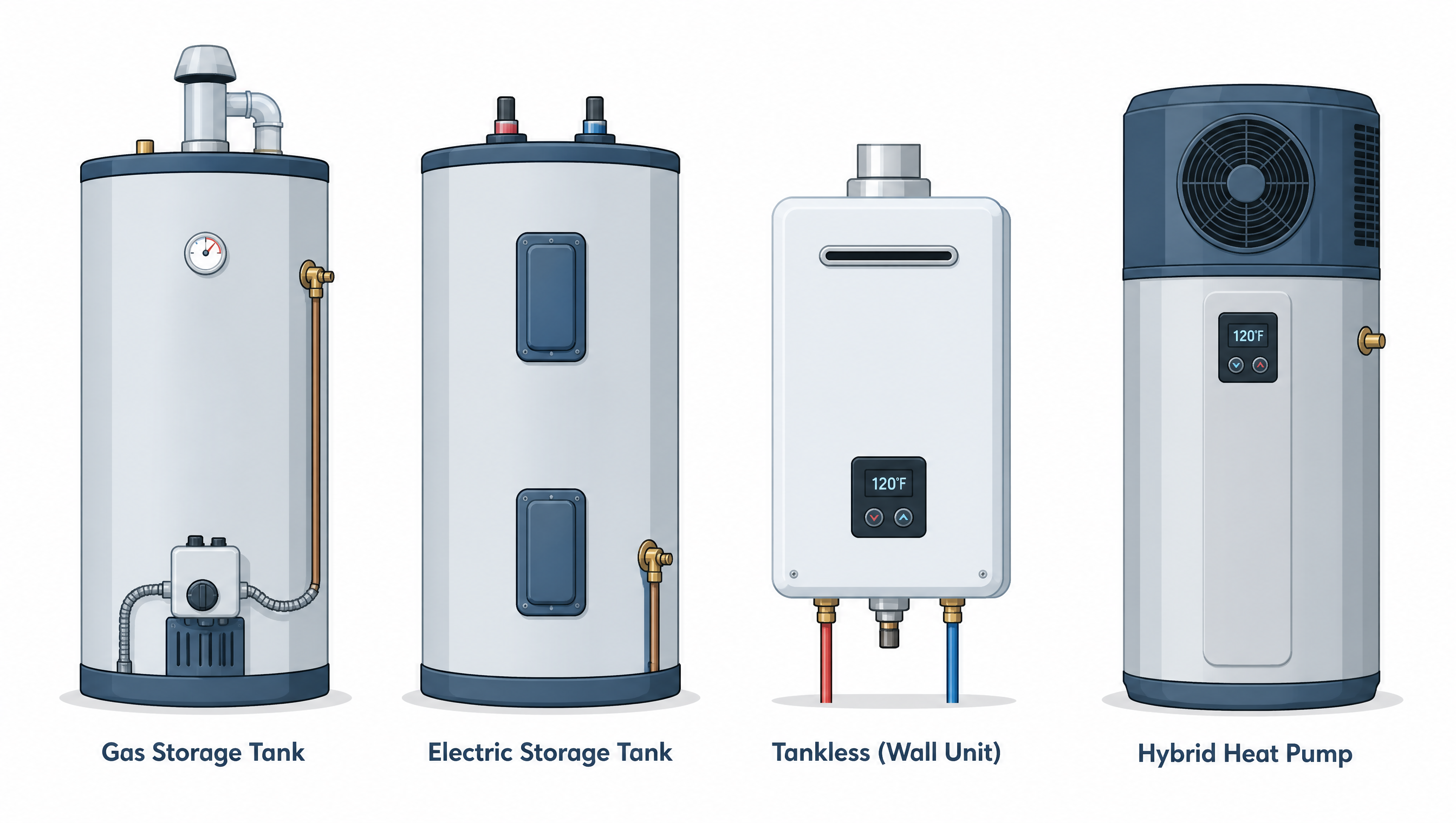
The 5 Main Types of Water Heaters at a Glance
At a glance, here is how the five types compare on installed cost, efficiency, and lifespan. A gas storage tank runs $1,200–$2,500 with moderate efficiency and an 8–12 year life. An electric storage tank runs $1,000–$2,200, moderate efficiency, 10–15 years. A gas tankless runs $3,000–$4,500 with high efficiency and 20+ years. A heat pump/hybrid runs $2,500–$4,500 with the highest efficiency and 13–15 years. Solar runs $3,000–$9,000 with high efficiency and a 15–20 year life. The cheapest to install is a tank; the cheapest to operate is a heat pump.
| Type | Installed Cost | Efficiency | Lifespan | Best For |
|---|---|---|---|---|
| Storage tank (gas) | $1,200–$2,500 | Moderate | 8–12 yrs | Low upfront cost |
| Storage tank (electric) | $1,000–$2,200 | Moderate | 10–15 yrs | Homes without gas |
| Tankless (gas) | $3,000–$4,500 | High | 20+ yrs | Endless hot water, savings |
| Heat pump / hybrid | $2,500–$4,500 | Highest | 13–15 yrs | Lowest operating cost |
| Solar | $3,000–$9,000 | High (sun-dependent) | 15–20 yrs | Max long-term savings |
Gas Storage Tank Water Heaters
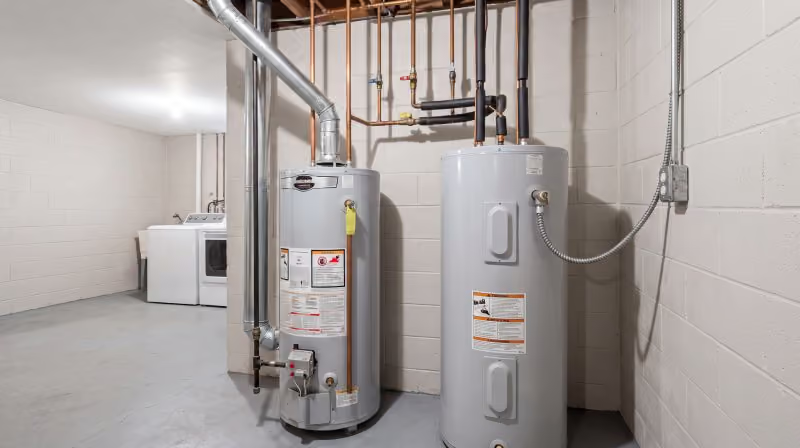
A gas storage tank heats and holds 40–75 gallons using a natural-gas burner. Pros: low upfront cost, fast recovery, and it keeps working during a power outage. Cons: higher standby heat loss and a shorter lifespan. Cost: $1,200–$2,500 installed. Best for: homes with an existing gas line that want the lowest upfront price.
Electric Storage Tank Water Heaters
An electric tank uses heating elements instead of a burner. Pros: low purchase price, simple install, a higher energy factor, and no venting required. Cons: higher operating cost in most areas and slower recovery. Cost: $1,000–$2,200 installed. Best for: homes without a gas line.
Tankless (On-Demand) Water Heaters
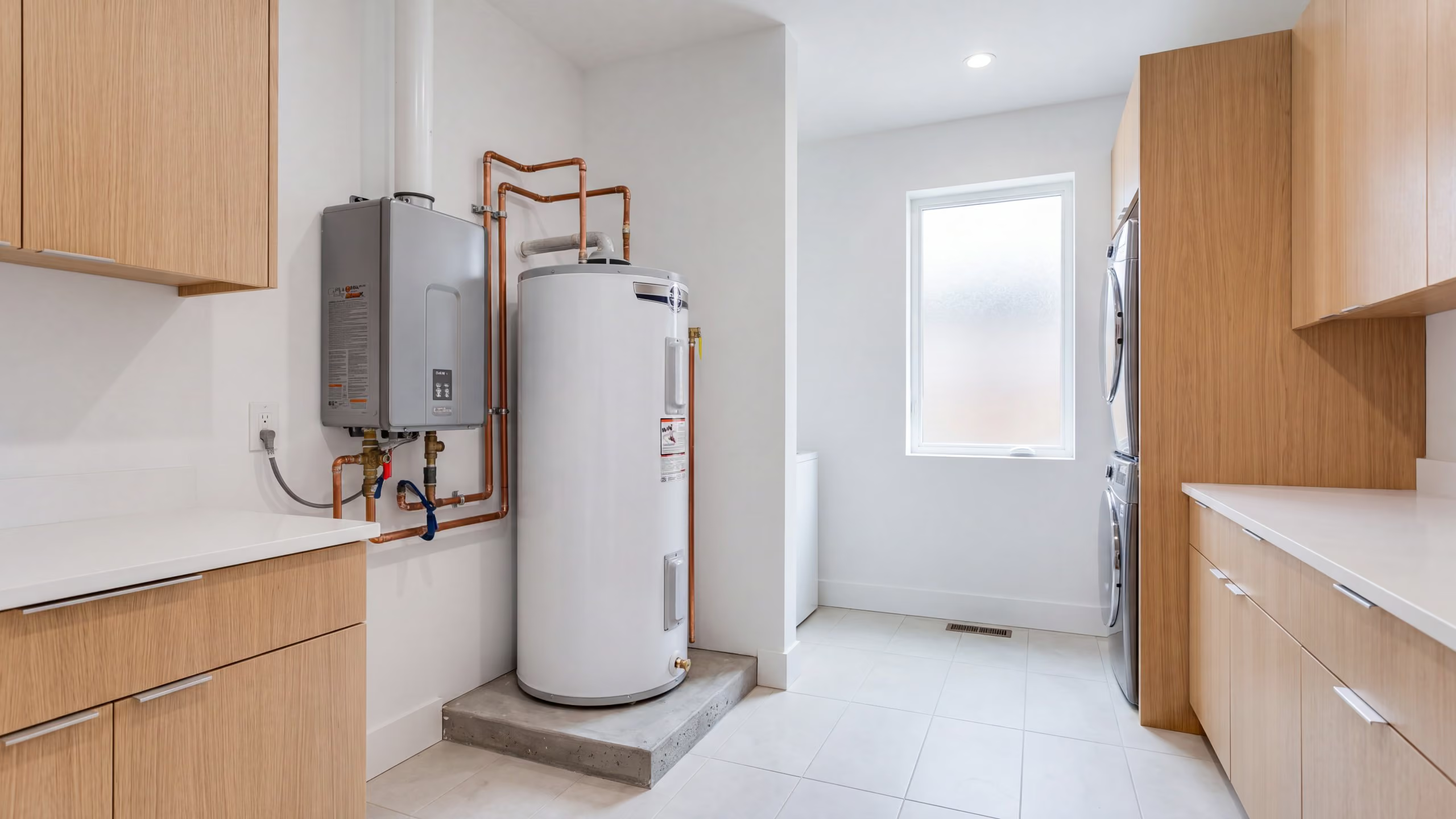
Tankless heaters warm water instantly as it flows, so you get endless hot water and no standby loss. Pros: high efficiency, a 20+ year lifespan, a compact footprint, and an endless supply. Cons: higher upfront cost and possible gas or venting upgrades. Cost: $3,000–$4,500 installed. Best for: households that want energy savings and never want to run out of hot water. See our tankless water heater installation.
Heat Pump (Hybrid) Water Heaters
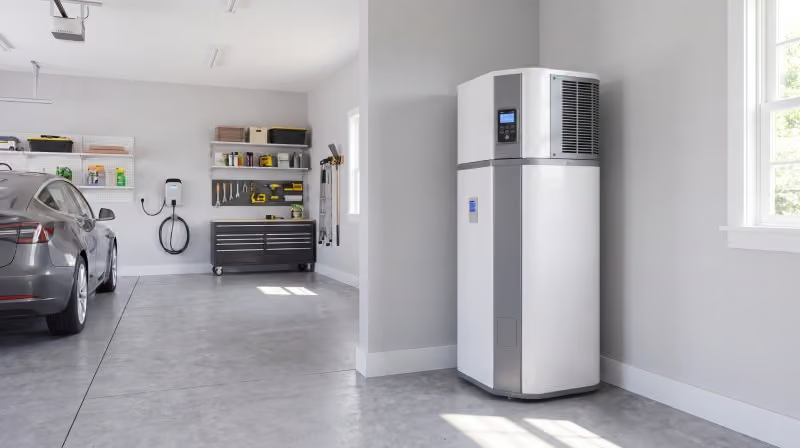
A heat pump water heater moves heat from the surrounding air into the water instead of generating it directly, making it 3–4 times more efficient than a standard electric tank. Pros: the lowest operating cost and eligibility for efficiency incentives. Cons: it needs a warm space with enough air volume, such as a garage, and has a higher upfront price. Cost: $2,500–$4,500 installed. Best for: homes with a garage or utility space that want the lowest energy bills.
Solar Water Heaters
Solar systems use roof collectors to heat water, usually paired with a backup tank. Pros: the biggest long-term savings and the lowest carbon footprint. Cons: the highest upfront cost and weather dependence. Cost: $3,000–$9,000 installed. Best for: homeowners focused on maximum long-term savings and sustainability.
How Do You Choose the Right Water Heater?
Start with your fuel source and available space. If you have gas and want a low upfront cost, a gas tank or gas tankless fits. No gas line? An electric tank or a heat pump is the move — and a heat pump will slash your operating cost if you have a warm garage. Factor in household size for capacity, then weigh upfront price against years of energy savings. The U.S. Department of Energy's overview is a helpful starting point (energy.gov).
Best Water Heater for a Sacramento Home
Sacramento's mild climate is a strong fit for heat pump water heaters, especially in a garage where they draw ample warm air most of the year. The region's hard water, though, means any tank benefits from annual flushing and a softener to prevent scale. Whichever type you choose, professional water heater installation ensures correct sizing and code compliance, and we offer same-day water heater repair if your current unit fails.
Choosing a Water Heater in Sacramento — Talk to Beaver Brothers Plumbing
Not sure which type of water heater is right for your home and budget? Beaver Brothers Plumbing has helped Sacramento homeowners choose and install every type for 25+ years, with honest recommendations and upfront pricing.
✔ Licensed & insured ✔ Same-day service ✔ Upfront pricing
📞 Contact Beaver Brothers Plumbing for a free estimate.
👉 Call (916) 885-1005 today to find the right water heater for your Sacramento home.
Frequently Asked Questions
What are the different types of water heaters?
The five main types are gas storage tank, electric storage tank, tankless (on-demand), heat pump (hybrid), and solar. They differ in upfront cost, efficiency, lifespan, and the home each one suits best.
Which type of water heater is most efficient?
Heat pump (hybrid) water heaters are the most efficient, running 3–4 times more efficiently than a standard electric tank. Solar and tankless units are also highly efficient compared with conventional storage tanks.
What is the difference between tank and tankless?
A tank heater stores and continuously reheats 40–75 gallons of hot water, while a tankless heater warms water only as it flows. Tankless units offer endless hot water, higher efficiency, and a longer lifespan, but cost more to install.
Are heat pump water heaters worth it?
For most homes with a warm space like a garage, yes. Heat pump water heaters have the lowest operating cost and qualify for efficiency incentives, though they cost more upfront and need adequate air volume.
Which water heater type lasts longest?
Tankless water heaters last the longest at 20+ years because they have no storage tank to corrode. Solar systems last 15–20 years, heat pumps 13–15 years, and traditional tanks 8–15 years.

Plumbing
Connect with us for expert plumbing tips, updates, and services — follow us on social media!