
To clear grease from a sink drain, start with very hot water and dish soap. If that doesn't work, try baking soda and vinegar, then a cup plunger, and finally a hand drain snake. One of those four steps clears most kitchen grease clogs. If none of them work, the grease is probably further down the pipe than you can reach, and it's time for a plumber.
Cooking grease, oil and fat go down the drain as a warm liquid. As they cool in the pipe, they turn solid and stick to the pipe walls. Food scraps, coffee grounds and soap residue get caught in that sticky layer, and the opening gets narrower each time you wash up. It starts as a slow, smelly drain and ends with a sink that won't drain at all.
Running hot water with the grease doesn't prevent this. It only carries the grease a little further before it hardens.
- Wear rubber gloves and eye protection. Drain water is dirty, and plunging and snaking can splash.
- Bail out standing water into a bucket so hot water and cleaners can reach the clog instead of sitting on top of it.
- Don't mix methods with chemical drain cleaners. If you've already poured a chemical cleaner in, don't plunge, snake or add anything else. The cleaner can splash onto your skin or into your eyes, and some combinations give off dangerous fumes. Call a plumber and tell them what product is in the pipe.
- Check the garbage disposal. If only the disposal side is slow, the clog may be in the disposal itself. Try its reset button first.
This gentle first step is often enough for a drain that's slow but not fully blocked.
- Squirt a generous amount of grease-cutting dish soap, a couple of tablespoons, directly into the drain.
- Heat a kettle of water until it's steaming, but take it off before it reaches a rolling boil.
- Pour it slowly into the drain opening in two or three stages, a few seconds apart.
- Wait a few minutes, run the hot tap, and repeat once or twice if the drain is improving.
Why it works: Dish soap breaks grease into small droplets that water can carry away, and the heat softens the buildup so the soap can get into it.
What to avoid: Water at a full boil. The drain pipes under most modern sinks are plastic (PVC or ABS), and boiling water can soften them and loosen the joints. Boiling water poured onto a porcelain sink can also crack it. Very hot water does the job without that risk.
- Pour 1/2 cup of baking soda into the drain.
- Follow with 1 cup of white vinegar.
- Cover the drain with a stopper or a wet rag and let it fizz for about 15 minutes.
- Flush with another kettle of very hot water.
Why it works: The fizzing stirs up and loosens soft buildup near the top of the drain, and it helps with odor.
Be realistic: The reaction is mild and won't dissolve a solid grease plug further down the line. It's best for light buildup and routine upkeep. Our guide to homemade drain cleaner recipes covers other combinations, such as baking soda and salt.
When the water won't go down at all, a plunger is the next step.
- Use a cup plunger with a flat rim. It seals better on a flat sink than a toilet plunger does.
- If you have a double sink, have someone hold a stopper or wet rag firmly over the other drain. Otherwise the pressure just pushes water up the other side.
- Leave or add enough water to cover the plunger cup by an inch or two.
- Press down to seal, then plunge firmly 15–20 times, keeping the seal. Pull off sharply on the last stroke.
- If the water drains, run hot water with a little dish soap for a minute to flush the loosened grease through.
If your dishwasher drains into the sink plumbing, plunging can push dirty water back up the dishwasher's drain hose. Check it afterward and run a rinse cycle if needed.
If plunging doesn't clear it, the clog is probably in the curved trap under the sink or in the pipe behind it.
- Put a bucket under the U-shaped trap. Loosen the two slip nuts by hand or with channel-lock pliers, and remove the trap.
- Empty and clean it. Grease and food often collect here, and sometimes this alone fixes the problem.
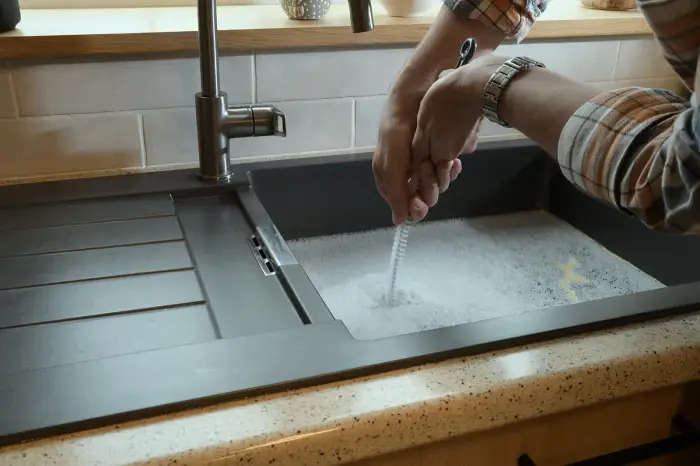
- Feed a hand drain snake (a drum auger with a 1/4-inch cable, sold at any hardware store) into the pipe that goes into the wall. Push the cable in while turning the handle.
- When you hit resistance, work the cable back and forth to break through, then pull it back out slowly.
- Put the trap back, run hot water, and check the slip nuts for leaks.
What to avoid: Don't feed a snake through a garbage disposal, because it can damage it. Also know that a snake punches a hole through a grease clog but leaves a coating on the pipe walls, so the drain may clog again in a few weeks.
Stop and call a plumber if:
- You've worked through all four steps and the sink still won't drain
- Water backs up into the other side of the sink or the dishwasher
- Other drains in the house are slow, or a tub or toilet gurgles when the sink drains, which points to a main line problem
- The same sink clogs again every few weeks
- You've already used a chemical drain cleaner
A plumber can reach further with a powered drain machine, and hydro jetting scours grease off the pipe walls instead of just opening a hole through the middle. If you need help now, our drain cleaning and repair service covers kitchen line clogs.
Chemical drain cleaners are tempting at this point, but they carry real risks. Read whether Drano is bad for your pipes before you reach for one.
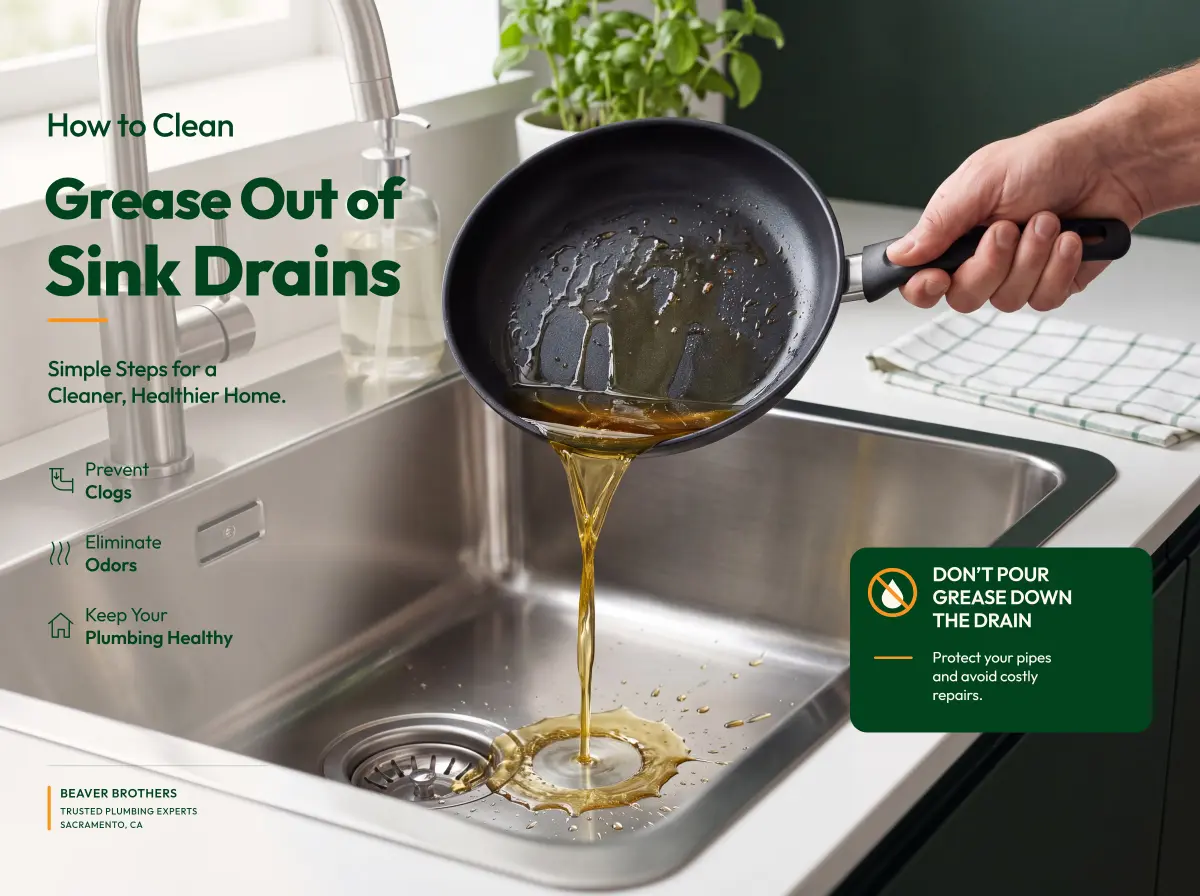
- Never pour grease, oil or fat down the drain, even with hot water and soap. Let it cool in the pan, then scrape or pour it into a can or jar with a lid and throw it away when it's full.
- Wipe greasy pans and plates with a paper towel before washing them.
- Use a sink strainer and scrape food scraps into the trash or compost.
- Don't count on the garbage disposal to handle grease, coffee grounds, eggshells, rice or pasta. It chops them up, but they still collect in the pipe.
- Flush the drain weekly with very hot water and a squirt of dish soap after the last dishes.
- For large amounts of cooking oil, such as from a deep fryer, check whether your city or county collects used cooking oil for recycling.
Will boiling water unclog a grease-clogged drain?
It can loosen light buildup, but it rarely clears a real clog and often just moves the grease further down the pipe. It can also soften plastic drain pipes and crack porcelain sinks. Very hot water with dish soap is safer.
What dissolves grease in a drain?
Dish soap breaks grease up so water can carry it away, and heat softens it. Enzyme drain cleaners digest buildup slowly and work best as monthly maintenance. Caustic chemical openers can break down grease but carry more risk to your pipes and to you.
How do I know if the clog is in my main line and not just the sink?
If only the kitchen sink is slow, the clog is probably in its trap or branch line. If several drains are slow at once, or water comes up in a tub or shower when you run the sink or flush a toilet, the blockage is likely in the main line. That needs a plumber.
If your kitchen sink keeps clogging or won't drain at all, we can clear the line and tell you what caused it. Contact Beaver Brothers Plumbing to book a visit.