
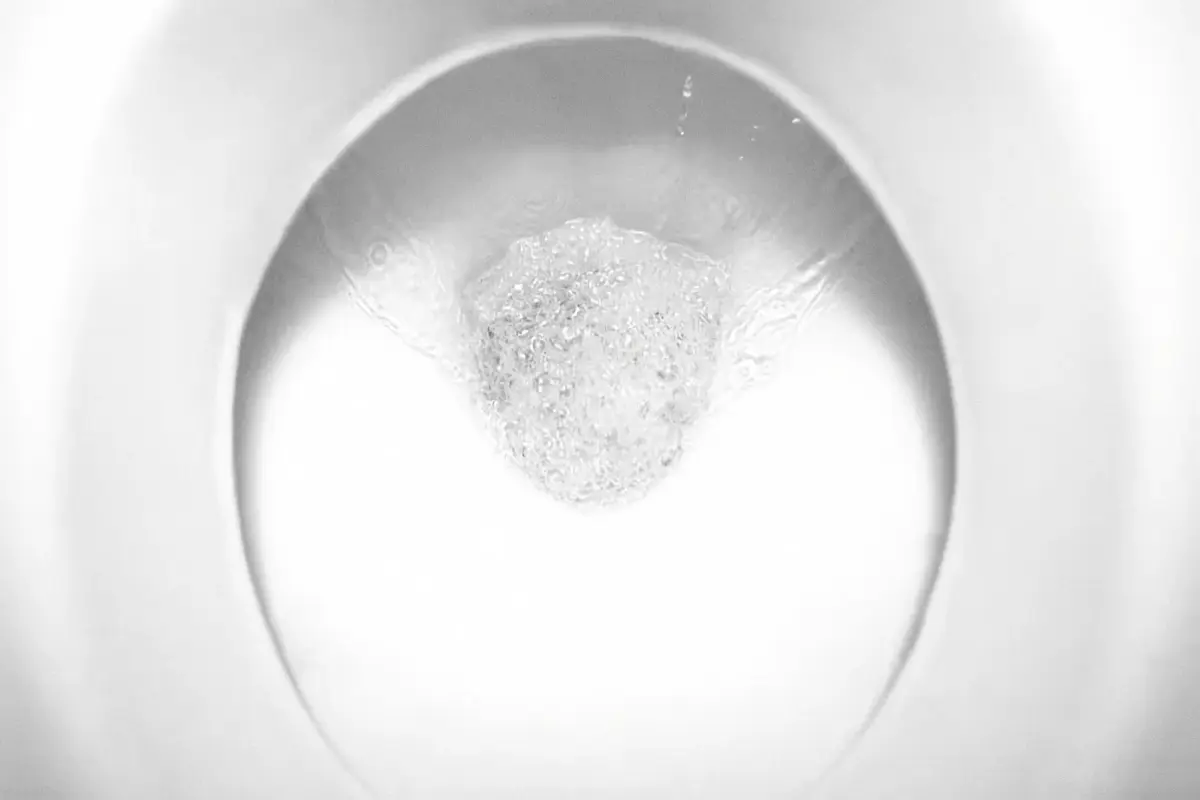
You can unclog a toilet without a plunger using dish soap and hot water, baking soda and vinegar, a bucket of water poured from waist height, a squeezed plastic bottle, a wrapped wire hanger, or an enzyme cleaner left overnight. Start with the gentlest method and work down the list. The right one depends on what's causing the clog, and a clog of toilet paper and waste responds very differently from a wipe or a toy.
Don't flush again to "test" it. Each flush adds a full tank of water to a bowl that can't drain.
- If the water is rising, take the lid off the tank and push the rubber flapper at the bottom closed. Or turn the shutoff valve behind the toilet clockwise to stop the water.
- Lay old towels around the base.
- Put on rubber gloves, ideally long ones. If the bowl is very full, use a cup to bail some water into a bucket so you have room to work.
Most clogs are too much toilet paper or waste. Those break down and respond well to the methods below. Wipes (including ones labeled "flushable"), paper towels and hygiene products don't break down the way toilet paper does. They often need mechanical help. If a solid object went down, such as a toy, a phone or a bottle cap, skip to the section on when to call a professional. Pushing an object further in makes it harder to get out.
- Squirt about a quarter cup of dish soap into the bowl.
- Wait 10–15 minutes while it sinks down to the clog.
- Slowly pour in half a gallon to a gallon of hot water, either hot tap water or water heated on the stove but well short of boiling.
- Let it sit another 10–15 minutes, then flush once.
Why it works: Soap coats and lubricates the clog so it slides more easily, and hot water softens paper and waste.
What to avoid: Boiling water. A toilet bowl is porcelain, and a sudden rush of boiling water can crack it. A cracked bowl means a new toilet. Hot tap water is enough.
- Pour 1 cup of baking soda into the bowl.
- Slowly add 2 cups of white vinegar. Go slowly, because it fizzes up.
- Wait about 30 minutes, then add some hot (not boiling) water and flush once.
Why it works: The fizzing stirs up and loosens soft, organic clogs near the bowl's outlet.
What to avoid: Don't use this after a chemical drain cleaner, and don't combine it with a bleach-based toilet cleaner. Vinegar and bleach together release chlorine gas. The reaction is mild, so it won't move a wad of wipes.
- Make sure the bowl is no more than half full. If it's higher, bail some out first.
- Fill a bucket with one to two gallons of warm water.
- Stand over the toilet and pour it in a steady stream from about waist height, aimed at the drain opening.
Why it works: A flush works by sending a large volume of water into the bowl quickly. The bucket pour does the same thing, and the falling water adds force to push a soft clog through.
What to avoid: Pouring into a bowl that's already full, because it will overflow. If the level doesn't drop afterward, don't try again right away.
- Fill a large, flexible plastic bottle with warm water.
- Cover the opening with your thumb, turn it upside down, and push the neck into the drain opening at the bottom of the bowl.
- Squeeze the bottle hard to send a jet of water into the drain. Repeat a few times.
Why it works: Instead of spreading out in the bowl, the water hits the clog directly, and that pressure can break up or dislodge a soft blockage.
What to avoid: Splashing. Wear long gloves and eye protection, because you're working in the dirty water. This method won't dislodge a solid object.
- Straighten a wire coat hanger, leaving a small hook at one end.
- Wrap the hooked end tightly in a rag and tape it in place. This protects the porcelain.
- Feed it gently into the drain opening, following the curve, and twist it to break up the clog or hook out whatever is caught.
Why it works: Most toilet clogs sit in the first bend of the toilet's built-in trap, which a hanger can reach.
What to avoid: Bare metal, which leaves scratches and marks on the porcelain. Don't force it either. If you hit something hard, stop, because you may push an object further down. A hanger only reaches a couple of feet.
- Pour in an enzyme-based drain cleaner, following the label.
- Leave it for several hours or overnight, then flush once.
Why it works: Enzymes break down organic material such as waste and toilet paper. Time works in your favor too, because a paper clog often softens enough to pass on its own after a few hours.
What to avoid: Expecting speed. Enzyme cleaners are slow, and they won't break down wipes, hygiene products or objects.
- Chemical drain openers. Most liquid drain cleaners aren't meant for toilets, so read the label. In a toilet they mostly sit in the bowl, and if they don't work you're left bailing out caustic water. Never mix them with other cleaners, and never plunge or snake after using one. See whether Drano is bad for your pipes for the full picture.
- Boiling water, which can crack porcelain.
- Repeated flushing, which leads to overflows.
Call a plumber if:
- You've tried two or three methods and the water still isn't going down
- An object is stuck in the toilet
- The toilet clogs over and over, which usually means a partial blockage further down the line
- Flushing makes the tub or shower back up, or nearby drains gurgle. That points to a main line blockage, so stop using water in the house until it's cleared.
- Water leaks from the base of the toilet after you've worked on it
A plumber can use a toilet auger, or remove the toilet to get an object out from underneath. For backups that affect more than one fixture, see our clogged drain service. Our toilet repair service covers the toilet itself, including leaks at the base. If clogs keep coming back, our article on why your house keeps getting drain clogs explains the usual causes.
Will a clogged toilet unclog itself?
Sometimes. A clog of toilet paper and waste often softens and passes on its own within a few hours to overnight. Wipes, paper towels and objects won't, so if the water level still hasn't dropped by morning, try the methods above or call a plumber.
Can I pour boiling water into a toilet to unclog it?
No. Boiling water can crack a porcelain bowl. Use hot tap water, or water heated on the stove but well short of boiling.
Why does my toilet keep clogging?
The usual causes are too much paper per flush, flushing wipes, or a partial blockage further down the drain line. A blocked plumbing vent can also make a toilet flush weakly. If you're plunging more than once a month, have the line checked.
If your toilet won't clear or keeps clogging, we can find the cause and fix it. Contact Beaver Brothers Plumbing to schedule a visit.