
Camera evidence, pipe geometry and the desired service result matter more than choosing a method from price alone. This guide turns that principle into a homeowner-ready framework using current national planning data, authoritative technical guidance and a clear list of questions for the written quote. Published cost ranges describe broad U.S. markets and should never be read as a fixed local price or a promise from Beaver Brothers Plumbing.
How Does Pipe Relining Differ from Full Pipe Replacement?
Describe lining, spot repair, pipe bursting, and open-trench replacement. Explain whether the original pipe remains, how flow diameter changes, and what access is required. Camera evidence, pipe geometry and the desired service result matter more than choosing a method from price alone. The goal is a decision that can be traced to measurements, documented site conditions and a written scope—not a product label or an isolated headline price. Homeowners should also separate the core plumbing or treatment work from restoration, electrical work, permits and other items that may be provided by different trades.
Relining. Cured-in-place lining leaves the cleaned host pipe in place and forms a new structural or semi-structural interior layer, with a modest change in inside diameter. In practice, the contractor should verify this condition on site and explain how it changes capacity, eligibility, labor or expected performance. Keeping that reasoning in the estimate makes competing proposals easier to compare and reduces the risk of buying a solution for the wrong problem.
Pipe bursting. Bursting fractures or displaces the old pipe while pulling a new pipe through the alignment and needs launch and receiving access. This is also where a low headline price can become misleading: omitted preparation, access, consumables or corrective work usually reappears later. Ask for the assumption, measurement and responsible party to be written down before treating an allowance as a firm total.
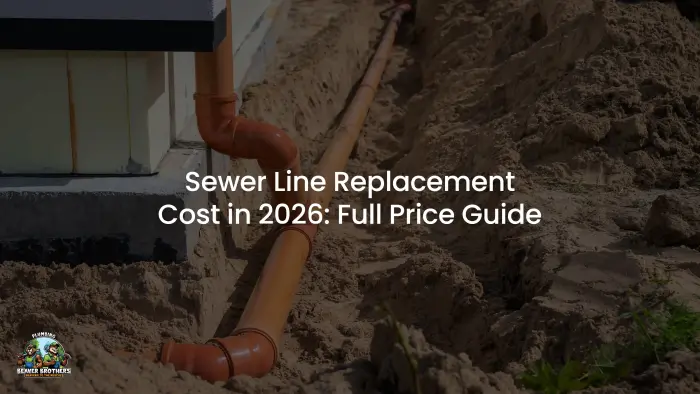
Open replacement. Excavation removes and replaces the failed pipe directly, allowing correction of slope, bedding and collapse but increasing surface disruption. The appropriate choice depends on the surrounding system rather than this factor alone. Review it alongside age, material, pressure or flow, maintenance burden, warranty limitations and the consequence of failure so the recommendation remains balanced.
- Relining: Cured-in-place lining leaves the cleaned host pipe in place and forms a new structural or semi-structural interior layer, with a modest change in inside diameter.
- Pipe bursting: Bursting fractures or displaces the old pipe while pulling a new pipe through the alignment and needs launch and receiving access.
- Open replacement: Excavation removes and replaces the failed pipe directly, allowing correction of slope, bedding and collapse but increasing surface disruption.
A useful quote or recommendation should therefore state the starting condition, the intended result, the method, the work needed to prepare the system and the test used to confirm completion. If a range is shown, ask which measured conditions place the project near its lower or upper end. If a performance claim is shown, ask whether it belongs to the exact model, installation and incoming conditions. This evidence-first approach does not guarantee that every hidden condition can be priced in advance, but it makes contingencies visible and gives the homeowner a clear approval point before extra work proceeds.
How Do Pipe Relining and Replacement Costs Compare?
A fair comparison covers per-foot and total cost drivers, preparation, access, excavation, reinstatement, landscaping, concrete, permits, and warranty. Keep ranges source-based and conditional. Camera evidence, pipe geometry and the desired service result matter more than choosing a method from price alone. The goal is a decision that can be traced to measurements, documented site conditions and a written scope—not a product label or an isolated headline price. Homeowners should also separate the core plumbing or treatment work from restoration, electrical work, permits and other items that may be provided by different trades.
Relining range. National planning guides commonly cite about $90 to $250 per foot for CIPP, with cleaning, access and branch work affecting the total. This is also where a low headline price can become misleading: omitted preparation, access, consumables or corrective work usually reappears later. Ask for the assumption, measurement and responsible party to be written down before treating an allowance as a firm total.
Replacement range. Complete sewer replacement often falls around $60 to $250 per foot before extensive restoration, depending on method, depth and access. The appropriate choice depends on the surrounding system rather than this factor alone. Review it alongside age, material, pressure or flow, maintenance burden, warranty limitations and the consequence of failure so the recommendation remains balanced.
Whole project. Concrete, landscaping, traffic control, permits, disposal and interior finish repair must be compared separately to avoid a misleading per-foot choice. In practice, the contractor should verify this condition on site and explain how it changes capacity, eligibility, labor or expected performance. Keeping that reasoning in the estimate makes competing proposals easier to compare and reduces the risk of buying a solution for the wrong problem.
| Decision factor | What the evidence means | Practical effect |
|---|---|---|
| Relining range | National planning guides commonly cite about $90 to $250 per foot for CIPP, with cleaning, access and branch work affecting the total. | Strong differentiator when the two options promise different outcomes. |
| Replacement range | Complete sewer replacement often falls around $60 to $250 per foot before extensive restoration, depending on method, depth and access. | Changes maintenance, disruption or eligibility and should be priced explicitly. |
| Whole project | Concrete, landscaping, traffic control, permits, disposal and interior finish repair must be compared separately to avoid a misleading per-foot choice. | May disqualify an option or make professional testing necessary. |
A useful quote or recommendation should therefore state the starting condition, the intended result, the method, the work needed to prepare the system and the test used to confirm completion. If a range is shown, ask which measured conditions place the project near its lower or upper end. If a performance claim is shown, ask whether it belongs to the exact model, installation and incoming conditions. This evidence-first approach does not guarantee that every hidden condition can be priced in advance, but it makes contingencies visible and gives the homeowner a clear approval point before extra work proceeds.
Which Pipe Conditions Are Suitable for Relining, Repair, or Replacement?
The decision should use camera findings to map cracks, corrosion, roots, offsets, bellies, collapse, diameter changes, and failed joints to possible solutions. Camera evidence, pipe geometry and the desired service result matter more than choosing a method from price alone. The goal is a decision that can be traced to measurements, documented site conditions and a written scope—not a product label or an isolated headline price. Homeowners should also separate the core plumbing or treatment work from restoration, electrical work, permits and other items that may be provided by different trades.
Cracks and corrosion. A cleanable pipe with continuous geometry may be lined, while isolated defects may support spot repair. The appropriate choice depends on the surrounding system rather than this factor alone. Review it alongside age, material, pressure or flow, maintenance burden, warranty limitations and the consequence of failure so the recommendation remains balanced.
Offsets, bellies and collapse. Severe displacement, improper grade or loss of cross-section can prevent lining and may require excavation or replacement. In practice, the contractor should verify this condition on site and explain how it changes capacity, eligibility, labor or expected performance. Keeping that reasoning in the estimate makes competing proposals easier to compare and reduces the risk of buying a solution for the wrong problem.
Roots and joints. Roots must be removed and the entry path stabilized; widespread joint movement can point to a broader structural problem. This is also where a low headline price can become misleading: omitted preparation, access, consumables or corrective work usually reappears later. Ask for the assumption, measurement and responsible party to be written down before treating an allowance as a firm total.
| Decision factor | What the evidence means | Practical effect |
|---|---|---|
| Cracks and corrosion | A cleanable pipe with continuous geometry may be lined, while isolated defects may support spot repair. | Confirm this before selecting equipment or approving the scope. |
| Offsets, bellies and collapse | Severe displacement, improper grade or loss of cross-section can prevent lining and may require excavation or replacement. | Ask for this item to be shown separately in the recommendation or quote. |
| Roots and joints | Roots must be removed and the entry path stabilized; widespread joint movement can point to a broader structural problem. | Use this evidence to compare total results, not only initial price. |
A useful quote or recommendation should therefore state the starting condition, the intended result, the method, the work needed to prepare the system and the test used to confirm completion. If a range is shown, ask which measured conditions place the project near its lower or upper end. If a performance claim is shown, ask whether it belongs to the exact model, installation and incoming conditions. This evidence-first approach does not guarantee that every hidden condition can be priced in advance, but it makes contingencies visible and gives the homeowner a clear approval point before extra work proceeds.
How Do Lifespan, Disruption, Warranty, and Property Impact Compare?
Evaluate expected service life, downtime, future access, property damage, warranty terms, and limitations for each option. Camera evidence, pipe geometry and the desired service result matter more than choosing a method from price alone. The goal is a decision that can be traced to measurements, documented site conditions and a written scope—not a product label or an isolated headline price. Homeowners should also separate the core plumbing or treatment work from restoration, electrical work, permits and other items that may be provided by different trades.
Longevity. EPA work reports properly designed and installed CIPP with a typical 50-year design expectation, but actual life depends on host conditions, materials and workmanship. In practice, the contractor should verify this condition on site and explain how it changes capacity, eligibility, labor or expected performance. Keeping that reasoning in the estimate makes competing proposals easier to compare and reduces the risk of buying a solution for the wrong problem.
Disruption. Relining usually reduces surface work and downtime, whereas open replacement provides direct correction at the cost of larger property impact. This is also where a low headline price can become misleading: omitted preparation, access, consumables or corrective work usually reappears later. Ask for the assumption, measurement and responsible party to be written down before treating an allowance as a firm total.
Warranty. Compare term, exclusions, transferability, post-work video and the remedy for defects instead of treating every warranty as equivalent. The appropriate choice depends on the surrounding system rather than this factor alone. Review it alongside age, material, pressure or flow, maintenance burden, warranty limitations and the consequence of failure so the recommendation remains balanced.
- Longevity: EPA work reports properly designed and installed CIPP with a typical 50-year design expectation, but actual life depends on host conditions, materials and workmanship.
- Disruption: Relining usually reduces surface work and downtime, whereas open replacement provides direct correction at the cost of larger property impact.
- Warranty: Compare term, exclusions, transferability, post-work video and the remedy for defects instead of treating every warranty as equivalent.
A useful quote or recommendation should therefore state the starting condition, the intended result, the method, the work needed to prepare the system and the test used to confirm completion. If a range is shown, ask which measured conditions place the project near its lower or upper end. If a performance claim is shown, ask whether it belongs to the exact model, installation and incoming conditions. This evidence-first approach does not guarantee that every hidden condition can be priced in advance, but it makes contingencies visible and gives the homeowner a clear approval point before extra work proceeds.
Which Pipe Rehabilitation Option Fits the Inspection Results?
The conclusion should provide with an inspection-led decision checklist, cite the sources used, and invite Beaver Brothers to document the line before quoting. Camera evidence, pipe geometry and the desired service result matter more than choosing a method from price alone. The goal is a decision that can be traced to measurements, documented site conditions and a written scope—not a product label or an isolated headline price. Homeowners should also separate the core plumbing or treatment work from restoration, electrical work, permits and other items that may be provided by different trades.
Document condition. Obtain a narrated video showing distances, branches, pipe material, defects and grade concerns. This is also where a low headline price can become misleading: omitted preparation, access, consumables or corrective work usually reappears later. Ask for the assumption, measurement and responsible party to be written down before treating an allowance as a firm total.
Screen methods. Eliminate methods that cannot correct the documented geometry or structural failure. The appropriate choice depends on the surrounding system rather than this factor alone. Review it alongside age, material, pressure or flow, maintenance burden, warranty limitations and the consequence of failure so the recommendation remains balanced.
Compare full scopes. Evaluate preparation, access, permits, restoration, warranty and closeout evidence before approving the least disruptive defensible option. In practice, the contractor should verify this condition on site and explain how it changes capacity, eligibility, labor or expected performance. Keeping that reasoning in the estimate makes competing proposals easier to compare and reduces the risk of buying a solution for the wrong problem.
- Document condition: Obtain a narrated video showing distances, branches, pipe material, defects and grade concerns.
- Screen methods: Eliminate methods that cannot correct the documented geometry or structural failure.
- Compare full scopes: Evaluate preparation, access, permits, restoration, warranty and closeout evidence before approving the least disruptive defensible option.
- Document the baseline: Record measurements, photographs, test results and existing conditions before work begins.
- Approve a written scope: Confirm inclusions, exclusions, permits, restoration, maintenance and closeout evidence before authorizing the project.
A useful quote or recommendation should therefore state the starting condition, the intended result, the method, the work needed to prepare the system and the test used to confirm completion. If a range is shown, ask which measured conditions place the project near its lower or upper end. If a performance claim is shown, ask whether it belongs to the exact model, installation and incoming conditions. This evidence-first approach does not guarantee that every hidden condition can be priced in advance, but it makes contingencies visible and gives the homeowner a clear approval point before extra work proceeds.
For a site-specific next step, contact Beaver Brothers Plumbing to schedule an assessment in the Greater Sacramento service area. The company states that it provides licensed and insured plumbing service, upfront pricing and system-specific recommendations; availability and the final scope are confirmed during scheduling and on-site diagnosis.