
Your drains need cleaning when water drains slowly, the pipes gurgle, a drain smells, the same drain keeps clogging, or water shows up where it shouldn't. The most useful thing to work out is how many fixtures are affected: one slow drain usually means a local clog, while several at once usually means a problem in the main sewer line.
Here is what each sign usually means and when to call for help.
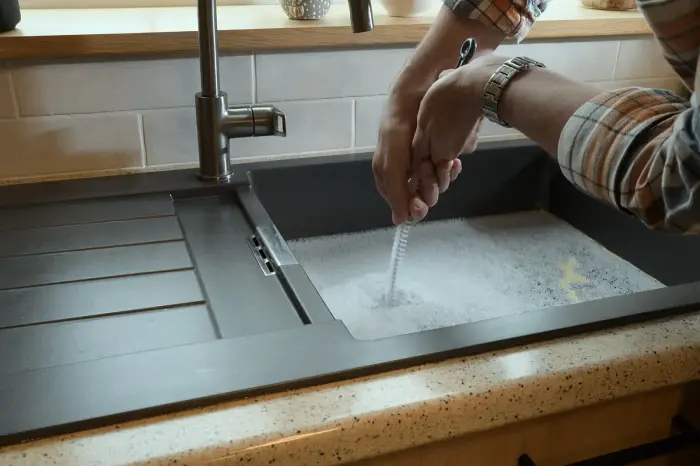
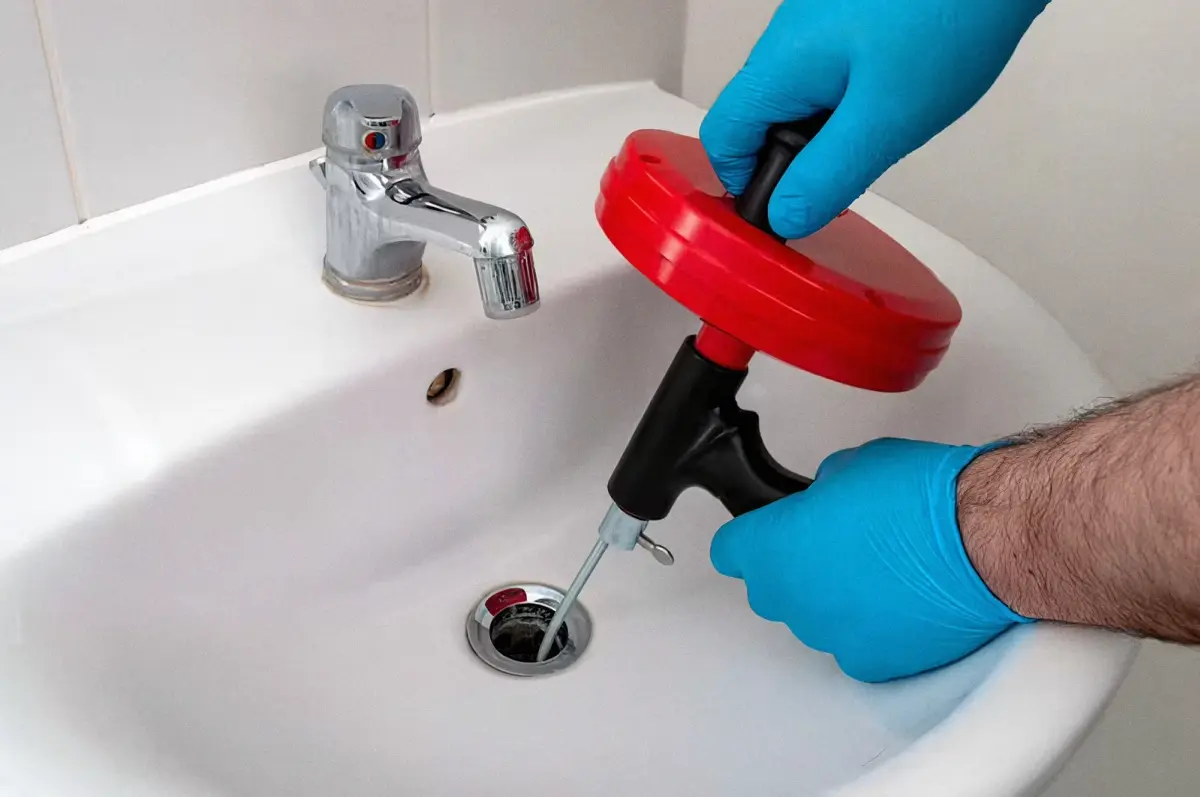
A single slow drain is usually a local clog. In a bathroom, that is hair and soap scum caught around the stopper or in the trap. In a kitchen, it is grease and food scraps. If several drains in the house are slow at the same time, the problem is farther down the line, in a shared branch pipe or the main sewer line.
Gurgling happens when water squeezes past a partial blockage and pulls air through the trap. A sink that gurgles as it drains usually has buildup in its own line. A toilet that gurgles when the shower or washing machine drains is more telling: it means those fixtures share a line that is partly blocked. A blocked roof vent can cause gurgling too.
Not every smell means a dirty drain. A floor drain or guest shower that is rarely used can dry out, which lets sewer gas escape through the empty trap. Running water for a minute usually fixes it. A musty or sour smell from a sink that is used every day usually comes from buildup inside the drain and overflow. A sewage smell in several rooms, or outside near your cleanout, points to the sewer line.
If you clear the same drain every few weeks, the problem is inside the pipe, not at the fixture. A plunger or small snake opens a path through the clog, but the grease or scale coating the pipe walls stays behind and catches the next clog. Tree roots, a sag in the line, or a damaged section of pipe cause the same pattern. We cover this in detail in why your house keeps getting drain clogs.
When the main line is blocked, wastewater from the whole house has nowhere to go, so it comes up through the lowest drain, usually a ground-floor shower, tub, or floor drain. Classic signs are water rising in the tub when you flush the toilet, or the toilet bubbling when the washing machine drains.
Watch for water around the base of a toilet, a laundry standpipe that overflows when the washer drains, damp spots under a sink cabinet, or water pooling around the outdoor cleanout. In the yard, a patch that stays soggy, or grass that is unusually lush along the path of the sewer line, can mean a leak or a blockage in that line.
Drain flies and fruit flies can breed in the organic film that builds up inside drains. If you have removed the obvious sources (fruit, trash, compost) and the flies keep coming back, the drain is the likely source. To check, tape a piece of clear tape loosely over the drain overnight. If flies are stuck to it in the morning, the drain needs cleaning, not just bug spray.
One slow or smelly drain is usually a problem you can fix yourself or with a quick service call. These signs point to the main line instead:
- Several fixtures are slow or backing up at the same time
- Water comes up in a tub or shower when you flush a toilet or run the washer
- Toilets gurgle when other fixtures drain
- Sewage smells outside, or water pools around the cleanout
- A drain keeps clogging no matter how often it is cleared
If you see these signs, use as little water as possible until the line is cleared. Every flush and load of laundry adds to what has to go somewhere. Don't pour chemical drain cleaner into a main-line backup, because it won't reach the clog and anyone working on the drain afterwards will be exposed to it. Don't open a cleanout cap if you suspect the line is full, because sewage can pour out.
In many older Sacramento-area neighborhoods, mature trees are a common cause of main-line clogs. Older sewer laterals often have joints that roots can work their way into, and once roots are inside the pipe they keep growing.
A good drain cleaning visit is more than running a snake until the water drains. Here is what to expect.
Diagnosis. The plumber asks which fixtures are affected and for how long, runs water at a few of them, and finds the best access point. For a main line, that is usually the outdoor cleanout. Without one, access may mean pulling a toilet.
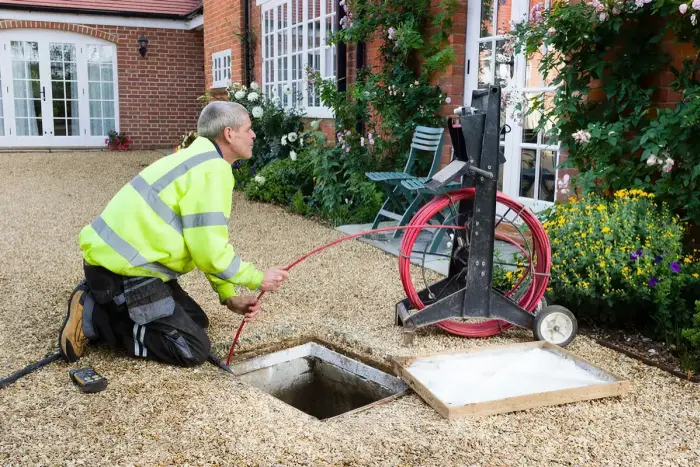
Clearing the line. For most clogs, the plumber uses a motorized cable machine with a cutting head that bores through the blockage and cuts roots. For grease, heavy buildup, or roots that keep returning, hydro jetting cleans the full width of the pipe instead of just opening a path.
A camera inspection when it makes sense. For recurring or main-line clogs, a camera shows what caused the problem, whether roots, a sag, a crack, or buildup, and whether the pipe is sound. That is the difference between clearing a clog and knowing whether it will come back. Our guide to camera inspections explains what they can find.
A clear explanation. You should leave knowing what caused the clog and whether the line needs anything more, such as regular maintenance or a repair.
Most national cost guides put clearing a single fixture drain at roughly $100 to $250, and a standard main-line cleaning at roughly $200 to $600. Jetting, a camera inspection, difficult access, or an after-hours call add to that. Local quotes vary, so ask what is included. Our drain cleaning cost guide breaks the numbers down further.
Catching a main-line clog early is much cheaper than dealing with a sewage backup. Cost guides commonly put sewage cleanup in the range of $2,000 to $10,000, and many standard homeowners policies don't cover sewer backups unless you have added an endorsement, so it is worth checking yours.
If any of these signs sound familiar, our drain cleaning service can find and clear the cause. Contact Beaver Brothers Plumbing to book a visit.
How often should drains be professionally cleaned?
Most homes don't need drain cleaning on a fixed schedule. If your line has a known problem, such as roots in the lateral, a sag, or heavy kitchen grease, regular maintenance cleaning can help, timed by how quickly the problem has come back before.
Can a slow drain fix itself?
Rarely. Buildup inside a pipe keeps growing as more hair, soap, and grease stick to it, so a slow drain usually gets slower. The exception is a smell from a dried-out trap, which running some water will fix.
Is gurgling a sign of a sewer line problem?
It can be. A single sink that gurgles as it drains usually has buildup in its own line. Toilets that gurgle when other fixtures drain suggest a partial blockage in a shared line or the main sewer line, and that should be checked soon.
Do I need a camera inspection every time a drain is cleaned?
No. A one-off clog in a sink or tub rarely needs one. A camera is worth it when clogs keep coming back, when several fixtures are affected, or when roots or pipe damage are suspected.