
A tankless water heater typically costs $2,000–$6,000 installed for a gas whole-house unit and $1,200–$3,500 for an electric one. The unit itself is usually less than half of that. The rest pays for labor and for the gas, venting and electrical work needed to run it, which is why switching from an old tank often costs at the top of the range or more.
The figures below are typical US ranges for 2026. Local quotes vary, and only an in-person look at your gas line, venting and electrical panel will show where your job falls.
| Type | Unit only | Typically installed |
|---|---|---|
| Electric point-of-use (one sink or bathroom) | $150–$400 | $450–$1,100 |
| Electric whole-house | $350–$1,000 | $1,200–$3,500 before any panel upgrade |
| Gas, non-condensing | $700–$1,500 | $2,000–$4,500 |
| Gas, condensing (high efficiency) | $1,200–$2,500 | $3,000–$6,000 |
| Switching from a gas tank to gas tankless | — | $4,000–$7,000 or more |
Labor rates in California are higher than in much of the country, so quotes in the Sacramento area tend to fall in the middle or upper part of these ranges.
A heater listed online for $1,000 costs $1,000 for the box. Installation adds labor, materials, the permit and any upgrades your home needs, and labor alone typically runs $600–$2,500. Replacing an old tankless unit with a similar one costs the least. Switching from a tank costs more because of the upgrades below.
A typical 40- or 50-gallon gas tank burns roughly 30,000–40,000 BTUs per hour. A whole-house tankless unit can burn 150,000–199,000, because it heats water in seconds rather than over an hour. The 1/2-inch gas line that fed your tank often can't supply that much gas, so it gets replaced with a larger line, usually 3/4-inch. Expect about $350–$2,000, depending on how long the new line is and how hard it is to get to. Sometimes the gas meter is also too small for the house's total gas use, and the utility has to upgrade it before the job can be finished.
You usually can't reuse the flue from your old tank. Non-condensing units need sealed stainless steel vent pipe. Condensing units can vent through cheaper PVC or polypropylene pipe, but they also need a drain for the slightly acidic water they produce. Venting typically adds $100–$1,500, and a condensate drain up to about $300. Outdoor models mount on an exterior wall and don't need a vent pipe at all.
Most gas tankless units need a 120-volt outlet to power their controls and fan. If there's no outlet nearby, a new circuit typically costs $250–$900. Electric whole-house units are a much bigger electrical job. A large 27-kilowatt model draws about 112 amps across three 240-volt circuits and in practice needs a 200-amp electrical service. If your panel is smaller or full, an upgrade typically adds $1,500–$4,000. That can cancel out the lower price of the electric unit.
California requires a permit to replace a water heater, and that includes switching to tankless. Fees vary by city and county and nationally commonly run $50–$300. Many quotes include hauling away the old tank. If yours doesn't, expect up to about $300. Units that deliver more gallons per minute (GPM) cost more, and so do condensing models. Rinnai, Navien, Noritz and Rheem are all common brands, but getting the size right matters more than the brand. Our guide to sizing a water heater for your household explains how to work out the flow rate you need.
Electric is cheaper to buy and install, as long as your panel can handle it. The catch is how much hot water it can make. In a Sacramento winter, water comes into the house at around 50°F. At that temperature, even a large 27-kilowatt electric unit can heat only about 2.5–3 gallons per minute to 120°F. That's enough for one shower and a sink at the same time. A whole-house gas unit can typically run two showers at once all year.
Electric makes the most sense for a small home, a distant bathroom, or a house without gas whose panel has room to spare. In homes that already have gas, a gas unit is usually the better whole-house choice.
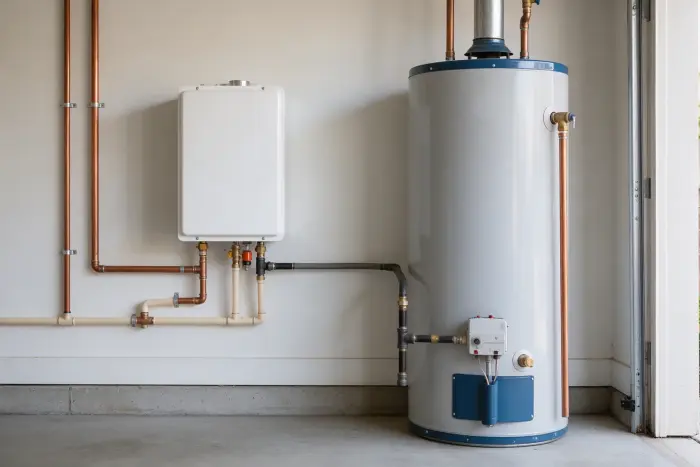
A standard 40- or 50-gallon gas tank replacement typically costs $1,200–$2,500 installed, because it reuses the existing gas line, flue and connections. Switching the same home to gas tankless usually costs $4,000–$7,000, often two to three times as much. Whether that's worth it depends on how long you'll stay and how your household uses hot water. Our comparison of tankless vs traditional water heaters helps you decide.
A tank keeps its water hot all day and night and loses heat the whole time. A tankless unit uses energy only while a hot tap is open. The U.S. Department of Energy estimates tankless heaters are 24–34% more energy efficient than standard tanks in homes that use 41 gallons of hot water a day or less. In homes that use around 86 gallons a day, the gain is 8–14%. In dollars, ENERGY STAR estimates a certified gas tankless heater saves a family of four about $95 a year compared with a standard gas tank, or about $1,800 over the heater's life.
Be realistic about payback. If going tankless costs $2,000 or more beyond a new tank, energy savings alone can take 20 years or longer to cover the difference. The stronger long-run argument is lifespan. A gas tank typically lasts 8–12 years, while a well-maintained tankless unit lasts 20 years or more, which can save you from buying a second tank.
That maintenance matters. A tankless unit needs descaling about once a year, and more often if you have hard water. A professional descaling typically costs $150–$350. Scale cuts hot water output and wears out the heat exchanger, and many manufacturer warranties don't cover scale damage.
The federal Energy Efficient Home Improvement Credit used to cover qualifying tankless heaters, but it doesn't apply to equipment installed after 2025. SMUD and PG&E have both run rebates for efficient water heaters, but the programs change often, and SMUD's current water heater rebates focus on heat pump models, not gas tankless. If your home is all-electric, get prices on heat pump water heaters too. Before you buy, check both utilities' websites for current programs and ask whether the model you've been quoted qualifies.
Ask each installer to itemize the quote: unit model and GPM rating, labor, gas line, venting, electrical, permit and removal of the old tank. Ask whether they've checked that your gas meter can handle the load. When two quotes are far apart, they usually cover different work. If you ask us to quote a tankless water heater installation, we'll break it down into those same line items.
Is a tankless water heater worth the extra cost?
Usually, if you plan to stay 10 years or more, have gas service and want hot water that doesn't run out. If you might move within a few years, a new tank is usually the better value, because you won't be there long enough for the savings to add up.
How much does it cost to replace an existing tankless water heater?
This is the cheapest tankless job, because the gas line, venting and power are already there. A like-for-like gas replacement typically falls in the $2,000–$4,500 range. The price goes up if you move to a larger unit or the old venting doesn't meet current code.
Can I install a tankless water heater myself?
We don't recommend it. The job involves gas piping, sealed venting or heavy 240-volt circuits, plus a permit and inspection. A badly sealed vent can leak carbon monoxide into the house, and some manufacturers limit warranty coverage on installs not done by a licensed professional.
If you're thinking about going tankless, we can check your gas line, venting and electrical panel and give you an itemized quote. Contact Beaver Brothers Plumbing to set up a visit, and ask about our current water heater special — new tank or tankless units installed from $2,999.